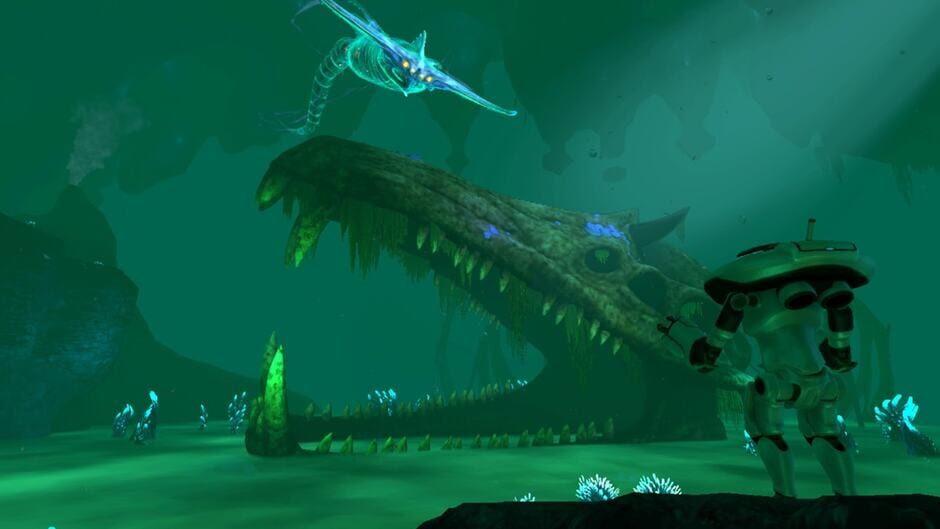
The Current State of 'Subnautica: Below Zero'
As of June 24, 2026, 'Subnautica: Below Zero' has experienced a notable increase in player engagement, with concurrent player counts reaching a peak of 2,002, marking a 13.4% rise from the prior week. This growth is particularly significant as it suggests a resurgence of interest in the game, potentially driven by new content, community discussions, or word-of-mouth recommendations. The game's current rating stands at an impressive 90.63% on Steam, reflecting a largely positive reception from players who find value in its immersive underwater exploration and survival mechanics.
However, the game's success has not come without its challenges. Recent server issues have become a point of contention within the community, leading to widespread discussions about connectivity problems and the overall stability of the multiplayer experience. Players have expressed frustration over the inability to connect to servers, a matter that underscores the complexities of managing online components in a game that emphasizes both solo and cooperative play. These issues have prompted inquiries into how the developers, Unknown Worlds Entertainment, plan to address these technical challenges moving forward.
What is particularly noteworthy here is how the design of 'Subnautica: Below Zero' impacts player behavior and expectations. The game’s emphasis on exploration, crafting, and environmental storytelling requires players not only to engage with its mechanics but also to invest emotionally in the unfolding narrative. This dual requirement of skill and emotional investment can enhance player satisfaction but may also lead to disappointment when technical issues arise, disrupting the immersive experience that the game strives to deliver.
Design Choices and Player Engagement
At the core of 'Subnautica: Below Zero' lies a design philosophy that prioritizes exploration and survival within an alien underwater world. Players are tasked with not only surviving but thriving by constructing bases, gathering resources, and navigating the treacherous ecosystems of the depths. This focus on crafting and building is not merely an aesthetic choice but a fundamental aspect of player agency and engagement. The game encourages players to experiment with different strategies for survival, thereby fostering a sense of ownership over their journey.
The concurrent player data reveals a pattern of engagement that suggests players are not only returning to the game but are also actively participating in its community. The recent spike in player counts could be interpreted as a direct response to content updates or community-driven events that reinvigorate interest. However, as previously mentioned, the technical issues that have arisen present a significant barrier to maintaining this engagement. The balance between design intent and execution is critical here; when server stability falters, even the most compelling gameplay can become marred by frustration.
Furthermore, the game’s commitment to environmental storytelling-an integral part of its design-demands that players engage with the world around them in meaningful ways. The underwater environments are meticulously crafted to invite exploration, with hidden secrets and lore waiting to be uncovered. This design choice serves to deepen immersion, yet it also requires players to invest time and effort into navigating the complex ecosystem, raising questions about how player expectations align with the challenges presented by the game.
Community Response and Technical Challenges
In the aftermath of the game's launch, community forums and social media platforms have become hotbeds of discussion regarding player experiences-both positive and negative. The enthusiastic reception of the game, as indicated by the high player ratings, stands in contrast to the vocal criticisms surrounding server connectivity. This dichotomy highlights a critical tension within the player base: while many are enamored with the exploration and crafting elements, others voice concerns about the reliability of the infrastructure supporting their multiplayer experiences.
The presence of server issues has sparked debates about the game's design decisions, particularly the implications of incorporating multiplayer elements into a primarily single-player narrative-driven experience. Players have raised questions about whether the focus on cooperative play detracts from the core immersive experience that 'Subnautica: Below Zero' aims to deliver. In this critic's assessment, the challenge lies in balancing the allure of multiplayer interactions with the need to maintain a stable and engaging single-player experience.
Moreover, the game's design has prompted discussions about the broader implications for the survival genre. As players seek not only challenge but also a seamless experience, the expectation for technical reliability becomes paramount. The conversations unfolding within the community serve as a reminder that the relationship between design, execution, and player experience is dynamic and often fraught with complexities that developers must navigate carefully.
Historical Context and Design Evolution
To fully appreciate the significance of 'Subnautica: Below Zero', one must consider the historical context of survival games within the gaming landscape. The original 'Subnautica' set a precedent for immersive, narrative-driven experiences set in vast, open worlds, where exploration is rewarded not just with resources, but with stories embedded in the environment. The sequel builds on this legacy while attempting to integrate more complex multiplayer features, reflecting a broader trend within the industry towards social gaming experiences.
However, this evolution raises important questions about the nature of survival gaming. As developers experiment with multiplayer elements, they must grapple with the foundational aspects that initially drew players to the genre-namely, the solitude and introspection that come from surviving in an alien landscape. The shift towards cooperative play may dilute these core elements, leading to an identity crisis within the genre. What is notable here is how 'Subnautica: Below Zero' navigates these challenges, attempting to retain the essence of its predecessor while adapting to contemporary gaming trends.
This historical lens underscores the significance of community feedback in shaping the game's trajectory. As players engage in discussions about their experiences, they are not merely voicing personal opinions; they are contributing to the ongoing evolution of the design itself. In this way, the community serves as a critical partner in the development process, highlighting the importance of listening to player voices in an era where expectations for engagement and reliability are higher than ever.
Why This Matters Now
The current state of 'Subnautica: Below Zero' embodies a critical moment in gaming where the interplay between design, community, and technology is more pronounced than ever. As player engagement fluctuates in response to technical challenges, it is essential for developers to recognize the implications of these dynamics. The interplay between game design and server stability will be a defining factor in how the game is perceived moving forward, influencing not only player retention but also the overall longevity of the title in a highly competitive market.
Moreover, as the game continues to evolve through updates and community feedback, the lessons learned from these early challenges can inform future design decisions not only for 'Subnautica: Below Zero' but for the survival genre as a whole. Developers must remain attuned to player sentiment, recognizing that the desire for an immersive experience must be balanced with the realities of operational stability.
In essence, 'Subnautica: Below Zero' is at a crossroads that reflects broader questions about the future of multiplayer in survival games. As the industry continues to evolve, the insights gathered from this title will undoubtedly contribute to shaping the next generation of gaming experiences, highlighting the importance of adaptability and responsiveness in design.
Looking Ahead
As we look ahead, the ongoing discussions surrounding 'Subnautica: Below Zero' will likely shape its development trajectory. The developers face the challenge of addressing technical issues while also enhancing the core gameplay experience. It is crucial for Unknown Worlds Entertainment to prioritize both server stability and player engagement, ensuring that the game not only meets current expectations but also sets a standard for future titles in the genre.
The community's response will be instrumental in guiding these efforts. As players continue to share their experiences and feedback, the developers have the opportunity to refine their approach, balancing the desires for multiplayer interaction with the immersive storytelling that has come to define the series. This iterative process is vital for cultivating a loyal player base that feels invested in the game's success.
Ultimately, 'Subnautica: Below Zero' stands as a testament to the complexities of modern game design. As it navigates the waters of player expectations, technical challenges, and community engagement, it offers valuable lessons for developers and players alike. The question that remains is: how will this underwater adventure adapt to ensure that it continues to be a beacon of exploration and survival in the gaming landscape?