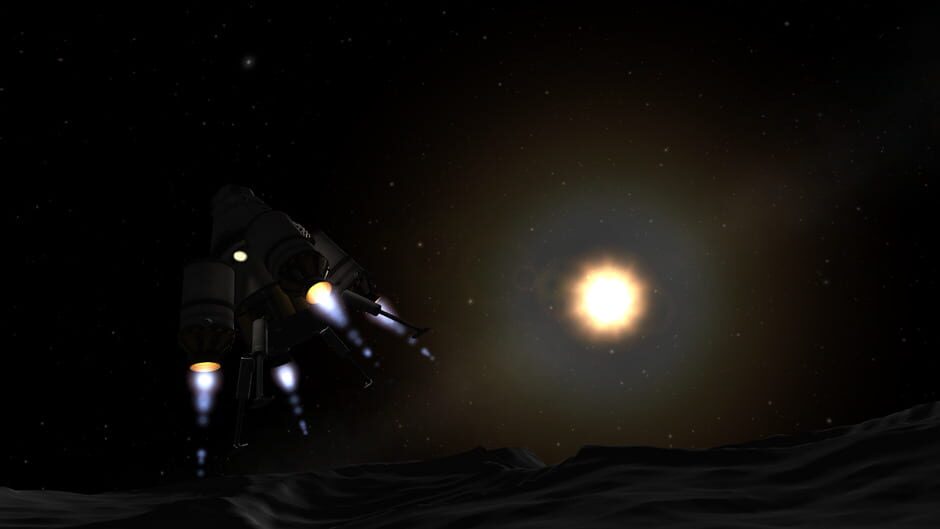
Space as a Canvas: The Evolution of 'Kerbal Space Program'
In the realm of simulation games, 'Kerbal Space Program' stands as a quintessential example of how design can transcend mere entertainment to deliver a complex, educational experience. Launched initially in 2015, the game has garnered a dedicated player base, even as it continues to evolve with patches and updates that enhance its gameplay mechanics and educational value. As of late May 2026, 'Kerbal Space Program' boasts a concurrent player count of approximately 4,717, reflecting a sustained interest in its intricate systems of physics and engineering.
At its core, 'Kerbal Space Program' challenges players not only to engage with its mechanics but to understand the underlying principles of rocketry and space travel. Unlike traditional games that often provide a linear path to victory, 'Kerbal' offers an open-ended experience where failures and successes are intimately tied to player ingenuity. This design choice emphasizes a pedagogical approach, where learning through trial and error becomes part of the core gameplay loop. This reflects a broader trend in simulation games, where the focus has shifted from mere replication of reality to an immersive exploration of possibilities.
The recent player count data suggests a slight decline of 9.7% from the previous week, a noteworthy dip that raises questions about player retention and the impact of ongoing updates. While this decline could be a temporary fluctuation, it also offers a lens into the challenges of keeping long-term players engaged in a title that, while rich in content, may struggle to maintain momentum against newer releases. This observation invites a reconsideration of what it means for a simulation game to remain relevant in an ever-evolving landscape.
In this critic's assessment, the educational value embedded in 'Kerbal Space Program' is not merely an ancillary benefit but a fundamental aspect of its appeal. The game’s ability to blur the lines between play and learning challenges conventional notions of what a game can achieve, positioning it as a pioneering example within the simulation genre.
Warhammer 40,000: Space Marine 2: A New Era of Action Gaming
Conversely, 'Warhammer 40,000: Space Marine 2' occupies a significantly different space within the gaming ecosystem, representing a resurgence of action-oriented gameplay steeped in narrative depth. Released in September 2024, the game quickly amassed a player base that peaked at over 21,489 concurrent players shortly after launch, reflecting a robust demand for high-octane, story-driven experiences. The game's ability to combine visceral combat mechanics with a rich lore environment echoes an industry trend towards more integrated narratives in action games.
A critical feature of 'Space Marine 2' is its commitment to delivering a seamless blend of gameplay and storytelling. Players are not merely engaging in combat; they are partaking in a sprawling narrative that invites them to explore the Warhammer universe in more depth. This design decision aligns with contemporary expectations that players have for action titles, where narrative and gameplay are no longer seen as disparate elements but rather as interconnected threads that enhance the overall experience.
Recent updates and expansions have further reinforced the game's narrative complexity, with the introduction of new missions and character arcs that deepen player engagement. This approach not only attracts new players but also retains existing ones by continually expanding the game's universe and the players' roles within it. The sustained interest in 'Space Marine 2' can be attributed to its ability to adapt and respond to player feedback, a critical component in maintaining relevance in a competitive genre.
This appears to be a deliberate design decision, as evidenced by the game's extended live support, which has officially been renewed for a third year. This commitment to ongoing content development signifies a shift in how action games are perceived and marketed, where longevity and player engagement are prioritized over rapid turnover of new titles. It raises the question of whether the future of action games lies in this model of persistent storytelling and content evolution.
Comparative Analysis: Divergence in Player Expectations
The contrast between 'Kerbal Space Program' and 'Warhammer 40,000: Space Marine 2' illuminates a significant inflection point in player expectations across genres. While simulation games have traditionally focused on procedural challenges and player creativity, action titles are increasingly expected to provide engaging narratives and character development. This divergence is emblematic of a broader tendency within the gaming community to seek experiences that not only entertain but also resonate on a personal or emotional level.
Furthermore, both titles reflect a growing recognition of the importance of community feedback in shaping design decisions. In this regard, 'Kerbal Space Program' benefits from a vibrant modding community that contributes to its longevity, while 'Space Marine 2' actively integrates player suggestions to refine gameplay mechanics and narrative pathways. This interaction between developers and players represents a significant shift towards a more collaborative approach in game design, where player input is not merely welcomed but essential.
The evolving relationship between players and developers also invites questions about the sustainability of these models. As player expectations shift, the pressure on developers to continuously innovate and respond can lead to a cycle of burnout, both for creators and consumers. The data gathered from both games' player engagement metrics indicates that while initial interest may be high, maintaining that engagement over the long term is fraught with challenges.
In this critic's assessment, understanding these evolving dynamics is crucial for the future of game design. The success of both 'Kerbal Space Program' and 'Warhammer 40,000: Space Marine 2' hinges not only on their individual merits but also on their ability to adapt to shifting player expectations and market conditions.
Why This Matters Now
The current landscape of gaming is marked by an unprecedented convergence of genres, with titles like 'Kerbal Space Program' and 'Warhammer 40,000: Space Marine 2' exemplifying this trend. As players increasingly demand multifaceted experiences that blend gameplay with narrative and educational elements, developers must navigate the complexities of these expectations while retaining their unique identities. The implications of this shift extend beyond individual titles, affecting the broader market and influencing future design paradigms.
Moreover, the recent fluctuations in player engagement signals a critical moment for the industry. Developers must be attuned to these shifts, understanding that a loyal player base is cultivated through sustained engagement and responsiveness to community feedback. The dialogue between players and developers is more essential than ever, as it shapes not only the trajectory of individual games but also the evolution of genres as a whole.
As players rediscover the joys of both simulation and action genres, the question that remains is not just what these games offer, but what they demand from their players. The expectations for depth, engagement, and narrative coherence are rising, challenging developers to rethink their approaches. This moment in gaming history presents an opportunity for innovation and exploration as the boundaries of genres blur and redefine the gaming experience.
In conclusion, the genre inflection observed in 'Kerbal Space Program' and 'Warhammer 40,000: Space Marine 2' speaks to a larger cultural shift within gaming. It raises vital questions about the future of game design, the expectations players will hold, and how developers can respond to these evolving needs.