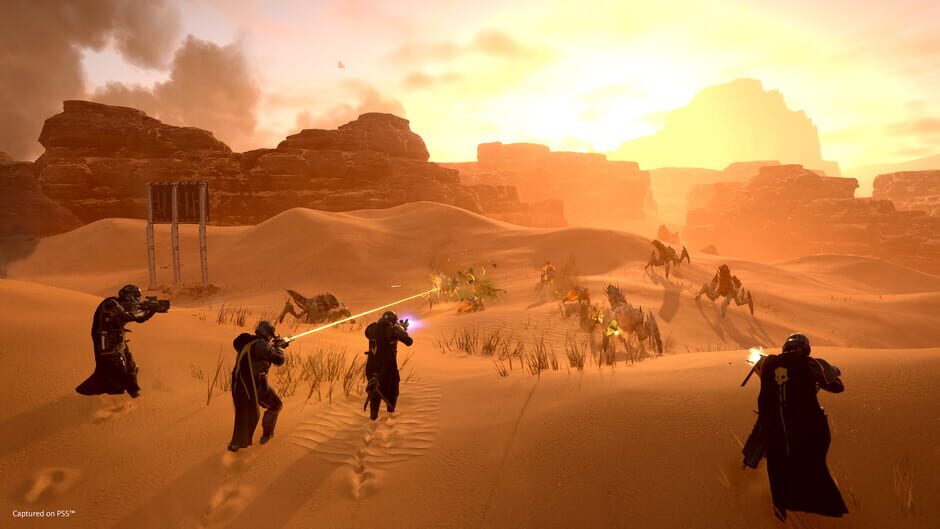
The Cooperative Core of HELLDIVERS™ 2
In the realm of cooperative gaming, HELLDIVERS™ 2 emerges as a title that demands not only individual skill but also a profound commitment to teamwork, a requirement that is perhaps best encapsulated in its design philosophy. Launched on February 8, 2024, this sequel to the original HELLDIVERS has quickly established itself as a title that necessitates players to engage with each other in meaningful ways, navigating the chaos of its battlefields through communication and shared strategy. The game’s mechanics are not just about shooting enemies; they are intricately woven into a fabric of collaboration where every player’s choices can significantly impact the outcome of missions.
What is notable here is the game's integration of mission design that actively promotes cooperation. For instance, players must coordinate their loadouts, strategize around enemy types, and share resources, all while responding to ever-changing battlefield conditions. The recent player count data, which peaked at 92,981 concurrent players, suggests that many find this cooperative aspect appealing, as they engage in missions that can only be completed through organized teamwork. This implies a community that is not only active but also eager to embrace the challenges presented by the game.
Engagement and Strategic Depth
The data also reveals engagement patterns that underline the strategic demands of HELLDIVERS™ 2. Players are not just participating; they are immersing themselves in a gameplay loop that requires both time and mental investment. Missions are designed to challenge players’ ability to strategize under pressure, where the consequences of failure can lead to significant in-game setbacks. This is a deliberate design decision that requires players to think critically and work together, fostering a sense of shared responsibility and accomplishment.
Moreover, HELLDIVERS™ 2’s introduction of Warbonds-a system that rewards players for completing specific objectives-further deepens this demand for strategy and cooperation. Unlike traditional battle passes, Warbonds are permanent and tied to player achievements within the game, which encourages players to collaborate over time to unlock rewards. This design choice not only enhances the longevity of the game but also cements the importance of cooperative gameplay in achieving personal and community goals.
Challenges of Player Coordination
However, the demand for such cooperation does not come without its challenges. As evidenced by recent player feedback and reports of server issues, including players struggling to find active missions or experiencing connectivity problems, the reliance on a seamless cooperative experience can lead to frustration. When over 19,000 players are on a single map and cannot join missions, it highlights the potential pitfalls of a system heavily dependent on player coordination and network stability. This raises the question of whether the game’s design adequately supports the level of cooperation it demands.
In this critic's assessment, while the game excels at creating scenarios that require teamwork, it must also account for the realities of player connectivity and the varying levels of engagement across its community. The balance between demanding cooperation and ensuring a smooth gameplay experience is delicate and crucial for retaining player interest.
The Player Experience and Its Implications
What this reveals about HELLDIVERS™ 2 is that it asks players to invest not only their time but also their social capital in a shared gaming experience. Players are required to navigate the intricacies of cooperation, balancing their individual play styles with the need to contribute to a collective objective. This dynamic fosters a community that is both collaborative and competitive, as players must constantly adapt their strategies based on the actions of their teammates and the evolving challenges presented in-game.
Furthermore, as the community continues to grow-currently ranking at 10 in top sellers on Steam-the implications for future updates are significant. Developers must consider how to enhance and support this cooperative framework, potentially by introducing more robust matchmaking systems or training tools that prepare players for the strategic demands of missions. The ongoing evolution of HELLDIVERS™ 2 could very well hinge on its ability to refine the cooperative experience while addressing the technical challenges that accompany such ambitious gameplay.
Conclusion: What HELLDIVERS™ 2 Asks of Its Players
Ultimately, HELLDIVERS™ 2 asks its players to embrace a multifaceted approach to gaming that intertwines cooperation, strategy, and community engagement. This design choice not only enriches the gameplay experience but also creates a platform for meaningful interactions within its player base. As such, the game stands as a testament to the potential of cooperative gameplay in fostering a vibrant gaming community. The challenge for both players and developers will be to ensure that this cooperative spirit is supported by a framework that allows for seamless engagement and sustained interest.
In conclusion, the more interesting question is not just how well HELLDIVERS™ 2 executes its cooperative mechanics but rather how it continues to evolve alongside its community, adapting to their needs and the realities of online play. As the game progresses, maintaining this balance will be crucial for its long-term success.