Opening Thoughts
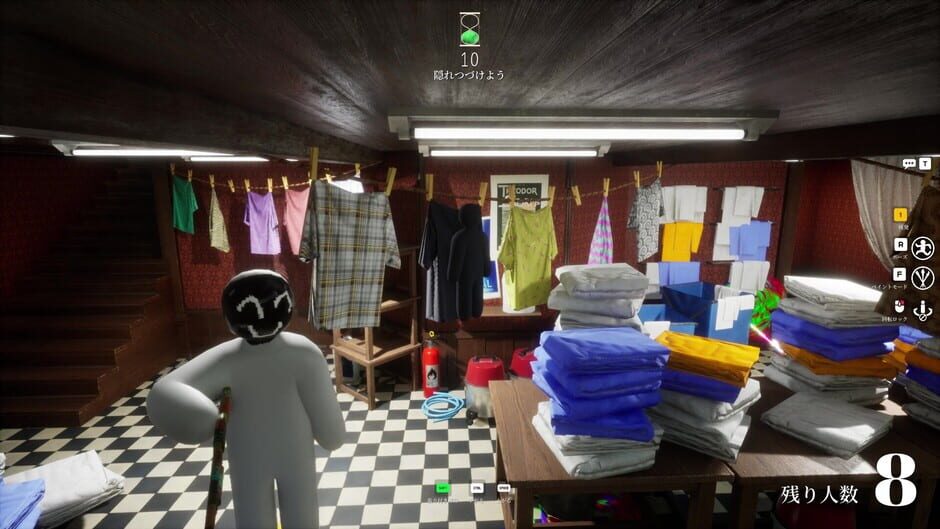
The roundtable began with Adrians Cole's declaration, 'MECCHA CHAMELEON is the leading title on Steam, yet it's already experiencing player drops.' His opening comments framed the discussion around player engagement versus sales.
This statement set the tone for an editorial session that quickly spiraled into an extensive debate. Julian Hart responded, attempting to unpack the design intricacies influencing player interactions.
'Sales numbers alone don't tell the complete story,' Hart argued, focusing on how player engagement can fluctuate without immediately impacting sales performance.
Miriam Vance weighed in next, emphasizing the importance of understanding player retention. 'We've seen significant drops comparing week-over-week metrics. It raises questions on long-term engagement,' she asserted, illustrating the diverging views beginning to emerge.
(I could already feel the tension rising. When the discussion centers around player experience versus numbers, chaos usually follows.)
Engagement Versus Sales
As the conversation unfolded, Adrian Cole dissected the numbers. 'In just days, we're watching MECCHA CHAMELEON fall from its peak player counts, right at a time when it remains the top seller. That's a serious red flag!'
Miriam and Julian interjected with thoughts about game design and player retention. 'But perhaps it's too early to associate these numbers directly with long-term failure,' Julian countered. 'We've seen games regain traction post-launch.'
Cole persisted, raising the critical point: 'Sure, but if we don't address this now, we risk losing the narrative that surrounds the game's success.' This pivot brought Miriam's perspective into focus about how communication strategies might play into player engagement.
'(This discussion isn't merely on numbers but affects market perceptions),' I noted. 'How are the narratives around the top sellers influencing player expectations and market behavior?'
The room began to roil with multiple discussions overlapping, revealing the chaotic nature of the editorial process as insights layered upon each other.
Community Engagement and Design Choices
Clara Bennett swiftly redirected the discourse back to player experiences. 'It's absolutely about the player, as always!' she insisted. 'The onboarding and community engagement strategies need vigorous scrutiny.'
Elias Monroe, eager to contribute, echoed her sentiment, adding, 'We have to consider our players' satisfaction to maintain our rankings. What are we doing that keeps them returning?'
At this moment, Julian raised the notion, 'MECCHA CHAMELEON must innovate and adapt, particularly considering its performance compared to competitors.' His tone suggested a deeper dive into design implications could guide the discourse.
Adrian's impatience seeped through again as he insisted, 'Yet talk is inexpensive without data! I need evidence that this innovative approach is leading to better retention.' His frustration was palpable, raising the stakes of this lively debate.
(A volatile combination of personal stakes and strong opinions was brewing among the team. Little did I know, this was only the beginning of an uncontainable session.)
A Shift in Player Dynamics
Before I could intervene, Miriam presented new insights, citing recent competitive landscape shifts. 'Look, declining player counts in titles like Slay the Spire 2 and Cyberpunk 2077 signal trends we can't ignore.' Her authority was rooted in recent data.
'But why should we connect those declines to MECCHA CHAMELEON's success?' Julian countered. 'I see it as a separate conversation entirely,' he insisted, seemingly irritated by the merging of these narratives.
Elias attempted to reclaim focus, saying, 'The influence of these titles isn’t isolated. We see how player engagement is shifting.' He offered a viewpoint forming a bridge between the ongoing discussions.
Though frustrated, I realized this exchange offered a direct insight into how intertwined the market narratives can become. Competing titles can influence player engagement perceptions, revealing more nuance than I had anticipated.
(We were now 30 minutes behind schedule. I quietly mourned the structured agenda we had initially set.)
Where We Lost the Thread
Suddenly, Clara drifted us into an entirely new area of debate, thrusting the player experience directly into the spotlight. 'But can we discuss the emotional connection? People gravitate toward narratives!' she urged, her focus unwavering.
This set off another chain of discussion, as Adrian interjected, 'That’s not the issue! The data shows clear declines and demand metrics! Let’s focus!' His displeasure at the direction of discussion was clear.
'The emotional connection is integral to understanding player retention,' Clara insisted, countering Cole. 'The game can’t just be about numbers!'
'But isn’t that exactly what we're tasked with analyzing? Numbers tell me how players engage with the product!' Adrian’s voice rose. It was chaos.
(I could sense Julian’s irritation as he attempted to refocus, 'I think this emotional engagement circles back to design choices, but...'
Yet Clara pressed onward, 'If the player base isn’t invested emotionally, all this data is moot!' This was where we lost sight of the agenda entirely. Everyone was off-roading.
In the midst of this back-and-forth, the contrasting ideas illuminated the multifaceted challenges developers face, but getting there was proving far less productive than I had hoped.
What We Agreed On, Eventually
A semblance of clarity emerged amidst the chaos as we reached an agreement on several points of convergence. First, the influence of initial player engagement on long-term success is a contradiction developers must understand. 'Understanding what pulls players back is essential,' Miriam asserted, reflecting unity.
We collectively recognized that innovative design choices must extend beyond initial sales spikes to nurture sustained player interest. Julian prompted this realization with his emphasis on adaptability in gameplay mechanics.
Elias chimed in, citing the competitive landscape, 'These metrics are connected. What does success look like for MECCHA CHAMELEON amidst compelling competition?' His balance of perspectives hinted at unifying principles.
The acknowledgment of shifting player dynamics as underlying themes solidified our understanding. We brainstormed ways to enhance community engagement and looked to how storytelling in video games played a critical role.
In this moment of consensus, I understood audiences expect multifaceted experiences from modern titles, weaving engagement and retention into the fabric of game design.
The Argument That Didn't End
Despite fruitful discussions, the disagreement surrounding concurrent player declines versus community engagement mechanics still loomed heavily over the session. Cole remained steadfast, declaring, 'We have to emphasize the risk of declining player counts, especially when associated with sales!' His passion was evident.
In contrast, Julian held his ground. 'Declines can happen; the emphasis must be on design to maintain interest. Focusing solely on numbers is reductive.' This argument lingered, underscoring varying philosophies on analysis approaches.
As discussions continued, Clara steered back towards emotional engagement. 'The narrative's role in games has never been more profound! Each argument must connect back to that!' Her persistence was an endorsement of deeper player connections.
Meanwhile, I could sense Adrian's frustration as he attempted to reconcile these views. His challenge had a pulse on both data-driven storytelling and the creative—their reconciliation seemed impossible.
This inability to resolve the discussion signified a deeper rift, one that debated the heart of gaming journalism itself: balancing market insights with experiential narratives.
Final Thoughts on the Roundtable Chaos
Reflecting on the session’s riotous ebb and flow, it’s clear that each editor played a vital role in establishing perspectives. Adrian Cole’s commitment to data serves a foundational function, yet Julian Hart’s insistence on meaningful design offers nuance.
Miriam Vance’s insights on player retention highlighted critical questions for the gaming landscape, while Clara Bennett continually redirected us toward the human element—the player experience, as she always does.
Elias Monroe, amidst the chaos, continually reminded us of the technical realities, alerting the team whenever they veered away from actionable insights. (He truly deserves more credit for containing the spontaneity.)
Ultimately, the roundtable proved chaotic but revealing, drawing forth rich insights into the world of player engagement and game design. There’s beauty in this disorder; through these discussions, we unearthed meaningful conclusions.
As we part ways, it's clear that current trends demand an ongoing commitment from us as journalists to explore not just the metrics, but also the narratives we construct around them—an endeavor worth every bit of inquiry.