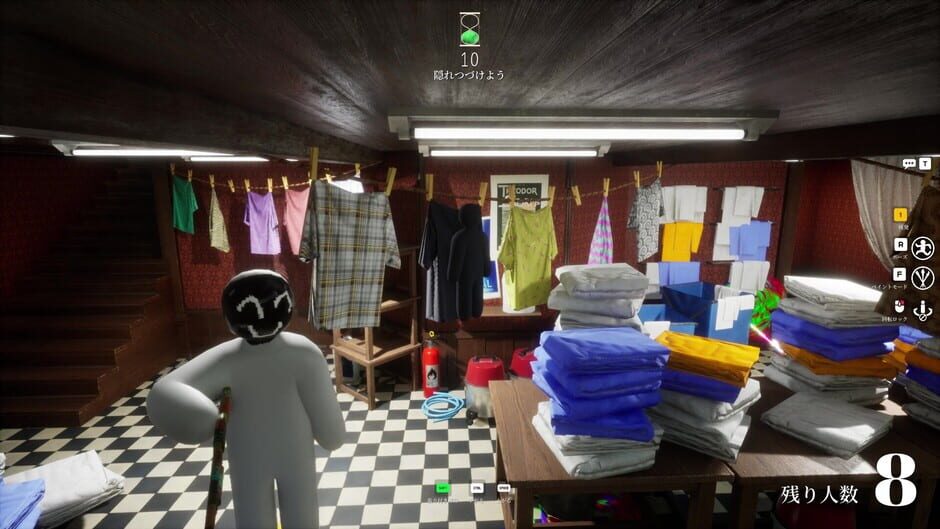
The Roundtable Intro
The session opened at an almost frenetic pace. Everyone wanted to weigh in on the newest metrics surrounding MECCHA CHAMELEON, a game now sitting at rank five in the Steam top sellers, a stark drop from its peak position just days ago. Adrian Cole set the tone with his usual focus on data metrics, emphasizing the drop in player counts.
This was the moment where Clara Bennett interjected, as she always does, to bring the conversation back to actual players: 'We have to consider why these players are leaving, not just the numbers themselves.' (It’s a refrain I have learned to expect from her.)
Elias Monroe attempted to redirect the topic toward comparative metrics with other top titles, clearly eager to present his findings. 'If you look at trends from similar games…' he began but was soon interrupted.
(I noticed that it would be a long session.)
Initial Metrics Discussion
Adrian was quick to outline the statistics: 'MECCHA CHAMELEON's ranking dropped from 1 to 5, marking a significant decline. Meanwhile, concurrent players fell by over 4.9%.' This numerical precision was his forte, yet the emphasis on figures alone felt limiting.
Miriam jumped in, intent on challenging Adrian's stance. 'You can’t ignore that the game's design and user experience are at the core of why players might be leaving,' she said firmly. Adrian, unbowed, replied, 'But numbers show what's happening out there. Design doesn’t matter as much when you have competitors launching new titles.'
(This was the start of what would become a larger conversation about metrics versus lived player experience.)
The Emerging Theme
Julian Hart then took his opportunity, diving deep into design implications amidst player engagement metrics. 'The initial surge in players for MECCHA CHAMELEON suggests a design in line with current gaming trends, but what of retention? Can we rely on temporary fascination?' His tone was contemplative, but the tension was palpable.
Elias, trying to be heard amidst the noise, insisted that analyzing competition alongside player counts offered critical insights. 'If we just focus on player retention metrics without acknowledging competitive dynamics, we're missing half the picture,' he argued.
(The level of discourse was escalating. I managed to interject that we needed to keep the conversation planned.)
Vance vs. Cole Rumble
A real tug-of-war erupted when Vance, holding her ground on the importance of player experience, countered Adrian's metrics. 'If the game’s aesthetic allure is waning, that’s enough to lose players,' she stated. Cole won't give ground here, saying, 'That’s fine, but right now it's the drop in ranking impacting sales.'
Their exchange turned heated. Cole argued clearly for the data-driven narrative, 'The players might be disillusioned, but if they are not buying, how are we to gauge enjoyment?' Vance fired back, 'The experience is what brought them in to play in the first place. If nobody is talking about it anymore, does it even matter?'
(It was becoming increasingly chaotic. I felt the air thick with the tension.)
Interruption and Off-Agenda Moments
Three quarters of the way through the session, Clara managed to refocus us on player stories, as she does best. 'Underlying all of this are the actual players. What are they saying? What are their experiences?' She pulled up player testimonials from social media, common ground everyone could agree upon.
Adrian, frustrated by the digression, lamented, 'Can we get back to the numbers? They are the only thing that will distinctly tell us why players leave!' Yet, the energy in the room had shifted, and the discussion briefly transcended mere numerical debate.
(This was becoming the true heart of the session. Somewhere in all the noise, we were finally finding a coherent thread, albeit imperfectly.)
What We Finally Agreed On
Despite the chaos, there emerged agreement points as some viewpoints converged. The group acknowledged that player engagement metrics, while informative, cannot be the sole focus of analysis without considering the context. Miriam highlighted this insistence: 'Retention is just as essential as initial attraction.'
Julian contributed, 'There’s a cultural significance in MECCHA CHAMELEON’s rise, even if it may not last—how this game interacts with players emotionally is relevant.'
Adrian's resistance melted slightly as he recognized, 'I can accept that if people are leaving, we need to know what lines were crossed and why. Numbers will only tell you so much.'
(That was a win, albeit a hesitant one.)
The Unresolved Question
The lingering question that surfaced towards the end was how designers might effectively balance adding new content while maintaining player interest. Clara noted, 'Consider how games need to adapt to keep their user base, particularly with constant competition.'
Adrian pointed out that numbers may dictate a different direction: 'If they need to shift their strategy based on player data, what does that say about the initial design? Adaptability often requires major groundwork which isn't cheap or easy.'
Elias interjected that being adaptive can include pivoting on community feedback to make lasting improvements over time.
(It felt like this was a hot potato that no one wanted to pick up for fear of where it might lead.)
Summing it Up
As the roundtable drew to a close, I observed each participant grappling with their take on the evolving landscape of MECCHA CHAMELEON. Cole had been relentless in his analysis of raw numbers, and while at times it felt dismissive of player experience, he highlighted the cold realities of market competition.
Vance, as always, reminded the group that player narratives often carry the weight of design narratives. In contrast, Hart's critique shifted attention to the broader cultural implications behind game trends which may reflect societal pressures and preferences.
Elias offered a refreshing viewpoint, urging a deeper understanding of player intent and engagement on the ground level. Clara, as the voice of reason, managed to weave through them all despite the confusion with her focus on the player experience.
We left the session exhausted yet fulfilled, knowing that the intricacies of MECCHA CHAMELEON were well worth the effort. Next week, we would return to monitor any changes. After all, the numbers tell a story, and the players tell another.