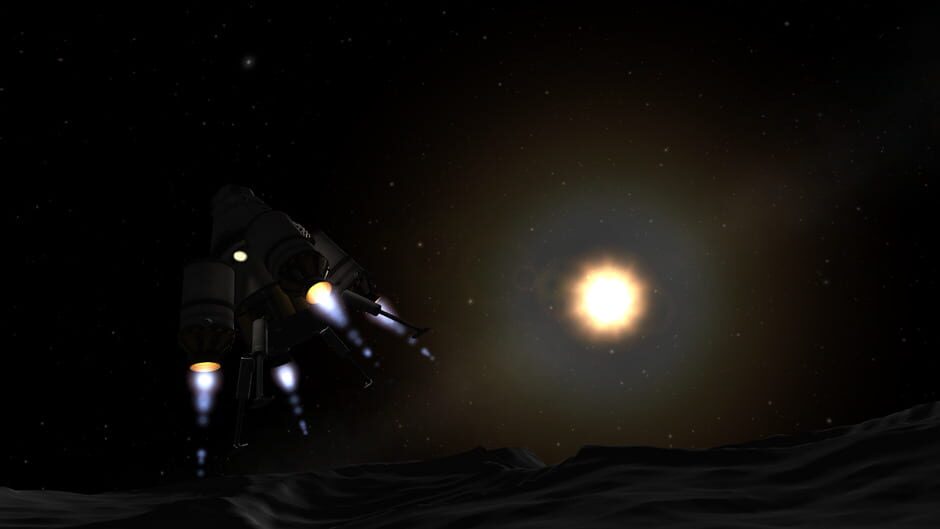
The Resilience of Kerbal Space Program
In the world of video games, few titles manage to maintain a vibrant player base nearly a decade post-launch, yet 'Kerbal Space Program' (KSP) stands as a testament to enduring design principles and community engagement. As of early July 2026, KSP has experienced a remarkable 62.9% week-over-week increase in concurrent players, peaking at 5,944-a notable resurgence for a game that originally launched on April 27, 2015. This uptick suggests not merely a fleeting interest but a sustained engagement, prompting us to ask what specific design elements contribute to such longevity.
The allure of KSP lies in its unique blend of complexity and accessibility. Players are not merely participants in a game; they are engineers and astronauts navigating the challenges of space exploration. The game's mechanics necessitate a deep understanding of physics, encouraging players to engage with concepts that transcend typical gaming experiences. What makes KSP particularly compelling is its ability to cultivate a sense of achievement through experimentation-a hallmark of effective simulation design.
By allowing players to approach problems from various angles, KSP fosters creativity and critical thinking, as evidenced by the countless user-generated content and modifications that enrich the gameplay experience. This community-driven aspect of KSP enhances its educational value, as players share their experiments and discoveries, further solidifying the game's position as a cornerstone of the simulation genre.
As we consider KSP's current state, it is worth asking what this resurgence means for the broader landscape of simulation games. Are we witnessing a shift in player expectations, or perhaps a reevaluation of what simulation can offer? The answers may lie in the game's continued emphasis on player agency and the intricate balance it strikes between challenge and accessibility.
Design Decisions that Define the Simulation Genre
Simulation games have historically walked a fine line between realism and playability. KSP's design philosophy exemplifies this balance, providing a sandbox experience where players can engage with the underlying mechanics of rocketry and orbital mechanics. Notably, the game's physics engine delivers both realism and a sense of wonder, as players watch their carefully constructed rockets either soar majestically into space or meet catastrophic failure. This duality serves not only to entertain but also to educate, reinforcing the game's status as a modern classic.
KSP's design encourages iterative learning. Players are prompted to reflect on their failures and successes, fostering a growth mindset that is increasingly valuable in today's world. This approach aligns with educational theories posited by scholars like Jean Piaget, who emphasized the importance of exploration and discovery in learning processes. KSP embodies this philosophy, allowing players to test hypotheses, adjust their designs, and gain insights into the mechanics of flight and space travel.
The game's interface, too, plays a critical role in player engagement. KSP's user interface is designed to accommodate a range of players-from novices to seasoned space engineers-by providing tools that are both powerful and intuitive. As players delve into the complexities of rocket science, they are guided by an interface that encourages exploration while still providing the necessary information to succeed. This thoughtful design decision is a key factor in KSP's sustained popularity and offers a model for future simulation titles to emulate.
Moreover, KSP's commitment to educational value extends beyond gameplay mechanics; it invites players to engage with real-world physics concepts in a way that is both enjoyable and informative. As educational institutions increasingly recognize the potential of games as teaching tools, KSP's design may serve as a blueprint for future educational simulations.
Community and Collaboration: The Lifeblood of KSP
The strength of KSP lies not just in its mechanics but in its community. The game has cultivated a passionate and creative player base that regularly shares designs, tutorials, and modifications, enriching the overall experience for everyone involved. The ability to collaborate and share knowledge is a defining characteristic of successful simulation games, and KSP exemplifies this principle through its active forums and social media presence.
User-generated content has played a pivotal role in KSP's longevity. Players have created everything from new rocket designs to entirely new missions, expanding the game's universe and offering fresh challenges that keep the experience engaging. This collaborative spirit is reminiscent of the modding communities surrounding other simulation games, such as 'Cities: Skylines' and 'The Sims', but KSP's focus on space exploration gives it a unique flavor that sets it apart.
Additionally, the game's ongoing development and expansion packs, such as 'Making History' and 'Breaking Ground', demonstrate a commitment to evolving the experience based on community feedback. This responsiveness not only strengthens the bond between developers and players but also reinforces the idea that KSP is a living project, one that grows and adapts over time. As new players join the community, they are welcomed into a wealth of shared knowledge, enhancing their journey from novice to expert.
In an era where many games prioritize monetization over community engagement, KSP's approach serves as a refreshing reminder of the power of collaboration in gaming. By fostering an environment where players can learn from one another, KSP not only enhances its gameplay but also reinforces its position as a cultural touchstone in the simulation genre.
The Educational Potential of Simulation Games
As we reflect on KSP's design and community engagement, it becomes clear that simulation games have the potential to serve as powerful educational tools. KSP's emphasis on creativity, problem-solving, and critical thinking aligns well with educational goals, making it an ideal candidate for integration into curricula. This potential is echoed by educators who recognize the value of games in fostering engagement and enhancing learning outcomes.
Research has shown that games can promote deeper cognitive engagement, and KSP's mechanics offer a perfect example of this phenomenon. Players are not merely passive recipients of information; they actively engage with complex systems, testing theories and refining their understanding of physics and engineering principles. This hands-on approach to learning can lead to greater retention and application of knowledge.
Furthermore, KSP encourages players to embrace failure as a natural part of the learning process. In a world where traditional educational systems often stigmatize mistakes, KSP's design empowers players to view failures as opportunities for growth and exploration. This mindset is essential in today's rapidly changing world, where adaptability and resilience are key skills for success.
As simulation games like KSP continue to evolve, their role in education will likely expand. With growing interest in integrating gaming into formal learning environments, KSP stands at the forefront of a movement that recognizes the value of interactive learning experiences. By fostering curiosity and encouraging players to explore complex systems, KSP not only entertains but also educates, paving the way for future innovations in the genre.
What This Means for the Future of Simulation Games
The resurgence of KSP raises compelling questions about the future of simulation games and their place within the gaming landscape. As players increasingly seek experiences that offer both entertainment and meaningful engagement, titles that prioritize educational value and community collaboration are likely to gain traction. KSP's success illustrates that games can transcend mere entertainment, becoming vehicles for exploration and learning.
Moreover, the game's design encourages developers to reconsider their approach to simulation mechanics. As KSP demonstrates, the key to successful simulation lies not only in accuracy but also in accessibility. Future titles must strive to balance realism with playability, ensuring that players feel empowered to experiment and learn without being overwhelmed by complexity.
As we look ahead, it is essential to recognize that the gaming industry is at a crossroads. With increasing interest in educational gaming and the potential for simulations to serve as teaching tools, developers have an opportunity to shape the future of the genre. KSP's enduring legacy serves as a reminder that games can be more than just a pastime; they can be catalysts for learning and growth.
In conclusion, as KSP continues to thrive, it challenges us to rethink our expectations of simulation games. Rather than viewing them solely as entertainment, we must recognize their potential to educate and inspire. The future of simulation games is bright, and KSP stands as a beacon for what is possible when design, community, and education intersect.
Why This Matters Now
As KSP celebrates its continued relevance in a crowded gaming landscape, the implications of its design and community engagement are profound. The game not only exemplifies the potential of simulation games to educate and inspire but also reflects a broader trend in gaming that values player agency and collaborative experiences. In an era where many titles struggle to maintain player interest, KSP's success serves as a model for how thoughtful design can foster lasting engagement.
Moreover, the rise of educational gaming offers a unique opportunity for developers to explore new avenues for innovation. As KSP demonstrates, simulation games can bridge the gap between entertainment and education, creating meaningful experiences that resonate with players of all ages. This shift in perspective is particularly relevant in today's rapidly evolving world, where the ability to adapt and learn is more crucial than ever.
As we consider the future of simulation games, it is essential to recognize the potential for titles like KSP to shape not only the gaming landscape but also the way we approach learning and engagement. By prioritizing creativity, collaboration, and exploration, developers can create experiences that empower players to think critically and embrace the challenges of the unknown. With KSP leading the charge, the future of simulation games is poised for exciting developments that will continue to resonate with players for years to come.