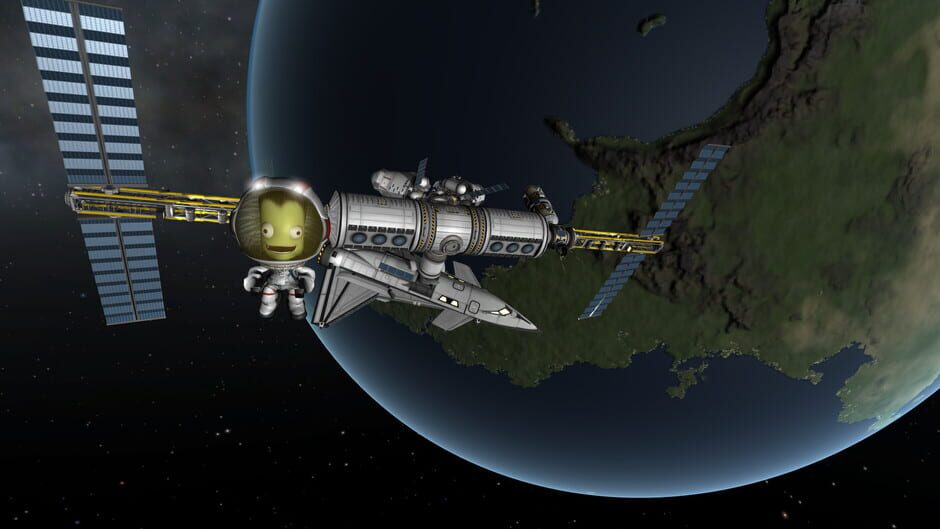
Introduction: The Overlooked Economic System
In the context of a game that has captured the imaginations of players since its initial release in 2015, Kerbal Space Program presents a fascinating case study not only in its whimsical depiction of space exploration but also in its intricate economic systems that remain, surprisingly, underexplored in the critical discourse. As of July 1, 2026, the game has seen a concurrent player count of 4,193, reflecting a notable decline of 26.6% from the previous week, a statistic that serves as a compelling backdrop for deeper inquiry into what this decline might signify beyond mere numbers.
The economic model within Kerbal Space Program is not merely a backdrop to its gameplay; it is a fundamental component that shapes player experience and engagement. Players are tasked with managing resources, funding their space programs, and navigating the complex interplay of financial investment and scientific exploration. However, the broader implications of these economic systems are often overshadowed by discussions surrounding gameplay mechanics and graphics, leaving a critical gap in our understanding of player motivations and the long-term sustainability of engagement with the game.
What is notable here is the potential disconnect between player feedback and the economic design of the game. While Kerbal Space Program boasts overwhelmingly positive reviews-95.22% of 127,162 reviews-players seem to engage less with its economic systems in their discussions. This raises the question: what are players really experiencing, and why might they choose to overlook the economic intricacies at play?
Understanding the Economic Mechanics
At its core, Kerbal Space Program employs a resource management system that intertwines with its gameplay mechanics, providing players with the opportunity to build and manage their own space program. Players are encouraged to collect funds by completing missions, which then can be allocated towards research, development, and construction of spacecraft. This cycle of earning and spending mirrors real-world economic principles, yet the implications of these systems are rarely the focus of player feedback or critique.
The game utilizes a currency system that reflects not only the financial investments made by players but also the emotional investments tied to their creations. Players invest time, creativity, and often a significant emotional connection to their spacecraft and missions. However, this emotional investment can lead to frustration when economic systems do not align with players' expectations, particularly when it comes to the cost of failure in the game. The high stakes of resource management can create tension, which while engaging also risks alienating players who may feel overwhelmed by the complexity.
Moreover, the economic system in Kerbal Space Program creates a unique tension between creativity and constraint. Players are encouraged to innovate, yet the limitations imposed by the economic structure can stifle creativity. This paradox emerges from the game's design: while it offers freedom to explore the cosmos, it demands careful management of resources that can become a source of stress rather than enjoyment. This duality warrants further examination, as it reveals a fundamental aspect of player psychology that may influence their engagement and long-term retention.
Cultural Context: The Role of Economy in Gaming
Historically, the role of economic systems in gaming has been a subject of considerable debate among critics and designers alike. The discourse surrounding video game economies often hinges on the balance between reward and risk, a theme prevalent in various genres from RPGs to simulation games. In the case of Kerbal Space Program, the economic model is particularly intriguing as it intersects with themes of exploration and human ingenuity, reminiscent of the narratives found in classic literature where characters face the dual challenge of ambition and resource limitation.
Consider the parallels in literature, such as in Jules Verne's *From the Earth to the Moon*, where ambition drives exploration but is continually tempered by the realities of physics and engineering. Similarly, in Kerbal Space Program, players are not just astronauts; they are engineers, economists, and risk managers navigating the complexities of space travel. This multifaceted approach to gameplay enriches the experience but also complicates the players' relationship with the economic systems, which may lead to ambivalence in their reception of the game's design.
This raises an important question about how players perceive the value of their in-game achievements relative to their economic investments. Are players more inclined to celebrate their creative successes, or do they focus on the economic implications of their actions? The answer to this question may reveal deeper insights into player psychology and could inform future design decisions in games that seek to balance creativity with economic realism.
The Impact of Player Engagement on Economic Systems
Kerbal Space Program's declining player count, now at 4,193 concurrent players, invites scrutiny into how economic design influences player engagement. As players encounter the game's economic systems, their experiences can significantly shape their overall satisfaction and continued investment in the game. The reduction in player engagement suggests that the economic model may be failing to resonate with current players, who may be seeking a more rewarding or less stressful experience.
In this critic's assessment, the economic systems in Kerbal Space Program must evolve to sustain player interest. Developers should consider how to make resource management more intuitive and less punitive, allowing players to focus on the joy of creation rather than the fear of financial mismanagement. A reimagining of the economic model could open new avenues for exploration and creativity, facilitating a more engaging player experience and encouraging long-term investment in the game.
Moreover, this shift could serve to attract new players who may have been deterred by the complexities of the current system. By simplifying certain economic aspects without sacrificing depth, the developers could create a more accessible entry point for newcomers while still catering to the seasoned players who relish the challenge of resource management. Such changes would not only enhance player satisfaction but also contribute to a more vibrant and engaged community.
Why This Matters
The ongoing discourse around Kerbal Space Program highlights an essential aspect of game design: the need for a comprehensive understanding of player experiences, especially in relation to economic systems. As the gaming industry continues to evolve, the lessons learned from Kerbal Space Program can inform broader conversations about player engagement and retention strategies.
By examining the unspoken economic mechanics within Kerbal Space Program, we gain insights into the ways that players relate to the game, their motivations for engagement, and the potential barriers that may deter them. In a market that increasingly prioritizes player satisfaction and community building, understanding these dynamics can drive more effective design decisions, fostering a more enriching experience for players.
Ultimately, this analysis raises a more interesting question: how can game developers refine their economic systems to better align with player expectations and desires? The answer may lie in a more player-centric approach to design, one that prioritizes not only the mechanics of the game but also the emotional and psychological dimensions of player engagement.
Conclusion: A Call for Critical Engagement
As we reflect on the economic systems of Kerbal Space Program and their impact on player engagement, it becomes imperative for both players and developers to engage critically with these mechanics. Players should advocate for the aspects of the game that resonate with them, while developers must remain open to feedback that can enhance the overall experience.
The interplay of creativity and economy in gaming is a complex and often uncharted territory that warrants deeper exploration. By fostering a critical dialogue around these systems, we can ensure that games like Kerbal Space Program continue to evolve and remain relevant in an ever-changing landscape. The economic model is not merely a system of numbers; it is a framework that shapes the player's journey through the cosmos, and understanding it could unlock new horizons for both players and creators alike.